

In the summer of 2020 I discovered myself, like many of us, trapped inside my apartment. As one who relied on exercise for my mental health, all my gyms had closed, so I took to running outside, where I could avoid other humans. My normal course took me from my apartment in Clarendon, VA, down the streets that lead to the Key Bridge, into Georgetown, down to the waterfront, then through the DuPont Circle/U-Street corridor and back. Depending on the side streets I opted for, typically an 8 – 10-mile run. Time alone with my music as well, these evening outings helped sustain my sanity.
One evening while pacing the waterfront, with the famous restaurant staples Fiola Mare, Tony and Joes, and Sequoia to my left, and the Rosslyn high-rises perched over the Potomac to my right, I pulled a calf muscle. Limping my way back towards the famous M and Wisconsin intersection, I gave my jog another go, to my detrimental assurance that, I’d pulled the calf and wouldn’t be jogging for at least a few weeks. With that realization, I mounted a scooter, scanned my phone to the QR code, and coasted my way home, back over the bridge, up the Rosslyn-Clarendon corridor, and to my apartment.
What was I to do?
I had nothing but time on my hands. Time, and curiosity. My neurodivergent dojo children had been suffering, and this had been a concern of mine, or even quasi-obsession for some time. I remember the moment this epiphany went through my head, “Ok Mike. It’s time to turn your apartment into your undergrad dorm room.” Subsequently, I logged into my Amazon account and began ordering books on PTSD. Beginning the mission that culminated in Petals in the Sun, the books arrived in the mail, and I soon discovered myself staring at letters seemingly presenting as foreign languages.
I continued reading.
Upon finishing the first book, I comprehended perhaps 10% of what I read. That 10% was the traction I placed my faith in. I understood something, and that something indicated that I was on the right track. Before opening a second book, I flipped back to the front and read the book again. And then again, and again. Highlighting, underlining and notetaking until I understood perhaps 70% of it. Then, I opened the second book. With a slight foundation already settled, I comprehended this second, foreign-language- based book, a little bit more. Flipping back to the front, I repeated this process. So now I’d read two books, many times each. It was time to understand where they got their ideas from.
I identified parts of the books that garnered curiosity, and parts that I needed more information for which to understand better. I located the footnotes associated with those ideas and flipped to the back to find the sources. Returning to Amazon, I ordered those books. When they arrived, I repeated this process.
Soon, ideas began to form as I was able to mesh this academic knowledge with my gifts of human observation. Back to Amazon. This time, instead of books, I ordered note cards. Filtering ideas onto little paper rectangles now, my ideas began to pepper countertops, my desk, and walls. I encompassed myself now, in ideas, everywhere I roamed in this, now research-apartment space. More books. More note cards. More books. Soon, I developed a process that necessitated three colors of pens. Blue for preliminary ideas. Red for revisions. Black for finalized ideas, or, ones I was confident in.
My walls became plastered with academic, mainly science journals, highlighted to pin down ideas I might need to retrieve later. In need of greater organization, I ordered large, clear, plastic sheets with pouches that housed notecards in groups of nine (three rows and three columns).
Each pouch showed the face of one card, displaying the title of an idea, under which were kept numerous other note cards elaborating upon those ideas. This way, I could stare at my ideas, contemplate their orders, pull them out, lay them on the floor or counter, spread them out, rearrange them, discover holes in them or questions, fill in ideas where elaboration was needed, and realign them. Then, I’d restack them and fit them back in their pouches. Eventually, these plastic notecard pouches in rows and columns of threes, hung from the ceiling and dominated my wall space.
Stacks of books with stickies protruding from pages rose from the ground like primitive Greek relics, reminding me that there lay an important idea I might need at some point, or an idea that required further exploration. Soon, I began to understand this new language. Soon, I began to use this new language to express the concerns I’d garnered over my traumatized divergent students. As a result, I came to know both myself and my students better.
A couple years later, I decided to show my therapist an idea I’d been working on. I was calling it, “The Path to the Self,” relying on psychology and neuroscience as a way of understanding and healing trauma, which was what I’d been doing in my dojo since I worked in Old Town, naturally as opposed to consciously and formally. Instead of asking “would you like to hear?” I asked, “Would you like me to show you?” She nodded in curiosity, for I’d been blabbering to her for some time about these new interests.
Kneeling on the floor, I opened my bag and procured several stacks of notecards, kept separated by clips, and notated on in different colors of ink. Each stack opened to reveal a string of other cards. I laid them out in order. As if reading a book, only downward instead of right to left, I spoke to her in a language that the PhD not only understood, but baffled over, “You are not supposed to be able to talk like this,” she stated in awe.
That one bit of reassurance led me to believe that I wasn’t taking shots in the dark, that I was on to something. For I didn’t have a professor or mentor help me with anything, from book recommendations, to questions with complicated ideas, or even how to pronounce some of these new words. Since then, I have received feedback, assurance, and direction from leading global neuroscientists. And that is the point of this first blog.
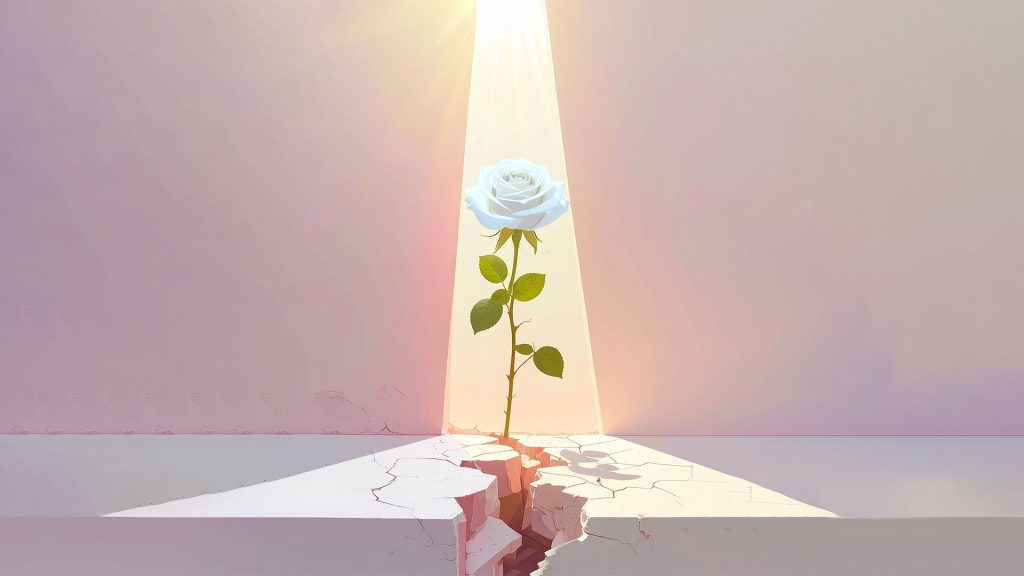
2020 opened the door, awarding me the space and time to explore concerns about my divergent students, who seemed hurt and traumatized. Here, I wished to open the window into my little dorm-room-apartment in Clarendon, where Petals began, a book offering context to the healing we’d been enjoying in my dojos for well over a decade. Petals is an effort to educate, spread awareness, and enable better quality of lives for parents and divergents.
Certainly, we refined our our identity and culture as a result of the intellectual underpinnings behind the physical ones. At the time, I couldn’t have predicted how this process would culminate. But now, I know. And so do you.
Thanks for reading. I hope to get the book to you soon.