

Preface
Petals in the Sun was written in honor of the neurodivergent children I worked with for over a decade and a half in the martial arts industry and the close friends and family members I lost growing up, who were also divergent. They seemed to share a commonality. They’d all been traumatized for being authentic, for being different. Many of them had either been beaten down or displayed a staunch rebelliousness as if to reflect, I’m not going to let anyone push me around, ever again. The sentiments resonated with me, and in the summer of 2020, I began pursuing what culminated as the intellectual underpinnings of the healing we’d been enjoying as a natural course of things within the dojos I oversaw from 2007 to 2023, a foundation that gave way to incredible feats, some of which are recounted in Petals.
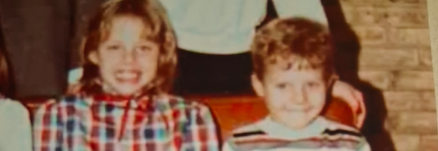
I too, struggled in school as a youth as an undiagnosed child with ADHD, placed in a classroom setting incompatible with the neurological recipe I was born with. Due to what I address in the chapters as misalignment—when humans are placed in environments unconducive to their abilities—I spent most of my daily energies resolving a self-perception contradictive to the one impressed upon me by family, teachers and peers. This conflict was expressed behaviorally, reflecting Karl Friston’s (arguably the world’s leading neuroscientist who has been cited in the scientific community more than Einstein), free energy principle.
Free energy is a fancy way of addressing the stress, or confusion brought about by things not making sense or going as planned, such as when you get lost, or when you take a sip of coffee to discover you’ve been served tea, or when a child is graded lower than her peers who senses with every bone in her body that she is both intellectually and emotionally more advanced. Or parenting that child. As you can see, different levels of free energy, or as Friston also calls it, surprise, reflect different levels of urgency. As a survival rule, we strive to minimize surprise, “All facets of behavior and cognition in living organisms follow a unique imperative: minimizing the surprise of their sensory observations.”[1] This book illuminates how neurodivergents attempted this in unique ways in the school system, my dojos, and home.
In efforts to resolve the free energy of misalignment one has two options: 1) changing one’s self-perception to align more with the environment, or 2) changing the environment to align more with one’s self-perception.[2] Friston explains:
Perception and action are two complementary ways to fulfill the same imperative: minimization of free energy. Perception minimizes free energy (and surprise) by…belief updating or changing your mind, thus making your beliefs compatible with sensory observations. Instead, action minimizes free energy (and surprise) by changing the world to make it more compatible with your beliefs and goals.[3] (Italics added)
For divergents, these imply either perceiving themselves the way other people do or expending great amounts of energy altering the environment so that they don’t suffer as much from this pigeonholing. The likelihood of resolving this healthily is minimal, as the former gives way to self-identities manifesting in incapability and low self-esteem that contradict how they feel about themselves, while the latter necessitates behaviors considered, rebellious. In both cases, neurodivergents are limited in their options and suffer great amounts of free energy, or, internal conflict. Petals denotes how this is often reflected behaviorally as PTSD symptoms of fight/flight, freeze, shutdown, or a compulsion to repeat (Chapter 3). The commonality of Post Traumatic Stress Disorder among my divergent karate students is what inspired Petals.
That the matter concerning our divergent children is urgent, I should know, having buried five way-too-young divergents, way-too-early, and having grieved with their parents. Few understand the urgency nor prove as adept at providing remedies as me, as demonstrated by my life’s work, which you’ll explore here. My role in the dojos was to reconcile this, free energy, by assuming struggling divergents presented by concerned parents and transitioning them from traumatized and often depleted miniature humans, into empowered pillars of a desired community, thriving and with a fulfilling sense of identity. This before it was too late, and with a sense of urgency that is missing from popular discourse and awareness. My goal here is to extend this sense of responsibility and urgency to you—parents, teachers, and divergents. We will all benefit from it, as will the peer group left out of the conversation thus far, the “normals.”
School and social settings bear rigid, orthodox structures increasingly bearing an us vs them mentality bolstered by the instrumental conditioning of socials and the standards associated with them (Chapter 5). Our gifted divergents often flounder here due to marks, or symptoms, of their authenticity, or an inability to present as normal. In the coming chapters we will explore how these resonated in bipolar disorder, cerebral palsy, ADHD and Asperger’s. Conversely, the chapters reveal an uncommonly witnessed or acknowledged truth that the aura that materializes around communities of divergents, is highly desirable.
When exposed to the laidback, light-hearted authenticity and freedom of self divergents exude, normals have demonstrated a tendency to cling to it, perhaps out of desperation. Overstressed by high-octane work/school environments, and over-repressed by aggressive social standards, they enjoy the sense of freedom we award them. It puts them at ease in a way one would seek therapy to achieve. They ask for more of it, beg to be more a part of it, and even pay a lot of money for it. My former grandmaster, who is largely responsible for popularizing karate in the US, commented upon visiting Urban Kempo (my dojo in Clarendon, VA) for the first time from Huntington Beach, “Mike, I’ve opened hundreds of karate schools. I’ve been all over the world. Seen dojos in many countries. As a rule, people with disabilities like that either get rejected from the school or put off in the corner and taught separately.” He continued while nodding his head, “This is a happy place. People come here. They feel better. And then they go home.”
The desirable nature of our light heartedness was something I’d seen before and helped cultivate in middle and high school (Chapter 4), and then recultivated later in life as a way to pay the bills (Chapter 5). In the absence of divergent acclimation, however, this truth remains a long stowed away secret, shrouded by stigmas that make sense to popular crowds yet have little to do with reality. But that seems to have been my ultimate gift in life—acclimating divergents into society in ways that are rarely, if ever, seen before. Petals is my most gallant attempt at this effort by way of the 2nd avenue through which to minimize free energy. I intend to change society by educating it.
My acclimating into academia later in life was also against the odds. I was taken in by a mentor who took a risk, assuming a student who had failed out of college after tearing an ACL and suffering the first real academic repercussions of his life. As a way of reconciling the free energy of misalignment as a child (the embarrassment of falling behind my peers), I rejected school in the 4th grade and struggled to read, pronounce words, or do anything beyond basic math, yet was passed due my status as an athlete. Upon returning to school, Dr. Rappaport let me into his scholarship-only class where I studied the great thinkers against the backdrop of a sunset over lower Manhattan.
Seated around a long, dark-oak, polished table with the scholarship students at Wagner College, I resolved much of my free energy by demonstrating my capability and evidencing my sense of self. Like the divergents presented in Petals, I believed in myself even amidst an onslaught of environmental evidence indicating I shouldn’t, such as low grades or what family, teachers and peers told me about myself. Also like them, it took a figure in a position of authority to believe in me to realize what I knew in my bones to be true since the 4th grade—that I wasn’t inferior. That I belonged. Or more, that I might even be uniquely gifted.
When the towers fell in Manhattan, I watched from my college campus across the Hudson River. Amidst the chaos that characterized New York City at the time, I became inspired to understand our behavior. My mentor trained this “failure” all the way to graduate school, awarding an empowering self-perception more aligned with my gifts than the sports-oriented one impressed upon me as a short, slow kid who couldn’t jump. Indeed, competitions in both the school and home are wars over perception at a base level. Who controls perception, controls how we are treated and often how we behave. If Dr. Rappaport doesn’t do that, then I don’t do this. And that is one reason I owed my best effort to the kids.
Dr. Rappaport was a short, flat-footed Jewish Brooklynite with a stuffy nose who lived in a quaint house on Staten Island. He’d invite me over to share brie and bread at his kitchen table, where he refined an undisciplined, burgeoning, thinking mind with discipline. He took me to the 42nd Street Library and showed me how to research. The most important thing I took from him was that, when you have a question, obtain the three most seminal works on the topic and read them until you understand. When you come across ideas that inspire you, or when you have a question, locate the footnote and acquire those books. By repeating the process, by this “digging,” you will answer your questions and discover new ones.
In 2020, I did that, obtaining the three most seminal books on PTSD. It was a foreign language to me. Read them until you understand. Their work led me to the well of neuroscience, where I was pleased to discover behavior was a central theme. Part of this “digging” resulted in my putting forth here a chemically-oriented socio-behavioral philosophy, serodopism, named for the correlation between the status chemical (serotonin) and the behavior-prompting chemical (dopamine). A cheesy name, perhaps. But this simple philosophy illuminates much of our social behavior, which, I know from a lifetime of experience, parents increasingly worry about in what has become a more intricate, complicated and vulnerable society.
When entities are named, we notice them. The ability to notice the serodopist will prove an asset as their affinity for status evokes behavioral strategies that prove dangerous to others, both in the school and home, where neurodivergents tend to be the most vulnerable targets. We’ll explore the serodopist in both settings in Chapters 4 and 6 respectively, elaborating upon perception wars and the principles that denote serodopism. While academics might balk at my effort to educate in this way, allow me to qualify.
I come from a large family in suburban Washington DC. My fifteen little cousins lived within a ten-mile radius of one another, and I began changing diapers as a routine at age seven. I babysat my first family of three at the age of nine. By eleven, I cared for a family of four over weekends, tending to the children alone, administering medications, feeding them three meals a day, bathing them, conflict-solving, telling bedtime stories, and handling all the duties of a parent. A family of five here, a set of twins there. Each time presented with a new set of personalities, dynamics, and joy. By the time I left for college, I’d participated in raising fifteen children in this way. It shouldn’t surprise that upon stumbling into the martial arts industry, local parents in Old Town, Alexandria discovered that the guy on St. Asaph Street was gifted with children.
In the university, both graduate and undergrad, I turned to the humanities to answer questions about masses of humans, with a focus on history and political philosophy. Then, I spent sixteen years in the martial arts industry where I studied you, specializing in neurodivergents, anthropologically, six days a week, observing, teaching, taking notes, and meeting with parents. Finally, I worked at the Meadows, arguably the most prestigious trauma-oriented rehab center in the world, having hosted some of the world’s most successful entertainers and athletes such as Selena Gomez and Michael Phelps. There, I had the luxury of tending to patients at the Adolescent Center, Claudia Black Young Adult Center, and Main Campus. Add contemporary neuroscience to this mix, and you have one primed to put forth a unique, fresh, and badly needed point of view on social behavior.
Neither Friston’s nor the other contributors’ principles are fly-by-night, run of the mill philosophies that you often encounter in popular literature. These are technical, mathematically bolstered, cutting-edge, advanced scientific findings by the most pioneering scientists emerging from the brain imaging revolution of the 1990’s, which enabled us to see inside neurons and track the nervous system’s operations. The revolution changed how we understood ourselves dramatically, and my understanding their work was a painstaking process, one with profound benefits. As a sort of rule, “It typically takes between 40 and 100 years for new theoretical concepts to become part of the common vernacular.”[4] As the bulk of science presented here was published between 2015 – 2022, Petals is one of two books endeavoring to deliver it much sooner than that, and the only one with this heavy a behavioral emphasis. As behavior reaps consequences, I’m offering this as both a preemptive parenting tool and a neurodivergent survival guide, urgently.
Parenting can have a happy-go-lucky quality to it, until your infants turn into teenagers overnight. The transition is accompanied by adult consequences that often dawn on the parent like a nuclear blast. Clear skies one minute, while the next, a mushroom cloud precedes a sonic boom that clears its way through your flesh and soul. I’ve seen it too many times. For almost seventeen years, I stood alongside the parents of my dojos, assisting in their efforts to raise children with challenges in contemporary America. Here I stand on the playing field with all of you, supplementing parental roles with knowledge needed to make better-informed decisions, as Karl Friston mentee Anna L. Pereira has noted,
A parent facing a child’s behavioral challenge may feel unsure at first, but a strong belief in their own capacity to learn new parenting tools can drive them to seek guidance, try new strategies, and remain emotionally present through the process. This belief helps align their internal expectations with external realities, making adaptation and coherence more likely.[5]
While there is an undeniable innocence underlying much of the text here, it is contrasted with a graphic urgency in honor of these “external realities.” I needed to keep it real. As a result, the book requires a level of age appropriateness (I am following this up with a children’s book). A fruitful activity might be to read and discuss with your teenager, as it is meant to supplement your lives simultaneously, and in different ways.
My goal was to take cutting-edge, otherwise complicated academic ideas, simplify them, apply behavioral analyses through relatable and entertaining nonfiction stories, making them available to the masses. Many told me it was useless. They won’t be able to get the science, they argued. They just want to be entertained, they said. I beg to differ. I think you want this. Millions of families need this. And you are absolutely capable of grasping it. The challenge was to teach the necessary esoteric material while maintaining the stories’ readability. What is the point of the ivory towers if the value of human knowledge fails to percolate among the people?
Due to Petals’ hybrid academic/entertainment nature, expect quotes and footnotes, as well as an ebb and flow from traditional narrative to the at times, academically didactic. The two are meant to complement each other. I am not a neuroscientist. Nor am I a psychologist. I’m a thinker who paid attention, is gifted in understanding and interacting with humans, was taught how to research, cares deeply, and dedicated my entire life, even my childhood, to helping children feel better about themselves and taking weight off parents. Many neurodivergent children died for these lessons to take shape, as did they persevere. I intend to leverage the knowledge derived from both ends of this pendulum to make sense of our contemporary circumstances. So too, do I intend to leverage what Pereira has noted—that “We are among the first to be able to so robustly intersect science with personal experience, providing deeper and more effective pathways for transformation.”[6]
This is an innovative work. It is new. As you’ll learn in the chapters, we are inclined towards predictability. I urge you to embrace the innovation. We are no longer at liberty to ignore the obvious: That our perceptions of one another give way to tragic behavioral consequences, and that negative consequences disproportionately impact divergents. Our behavior matters. Knowledge is the key to change.
Lastly, this book was written under some very harsh conditions. Ultimately, I was unable to move forward with publishing, as things come to a permanent hault that was out of my hands. Subsequently, what you have here, while its in fullest body, may have a discrepency in bothy technique concerning footnotes (for example, when pasting to the site the footnotes appear after the quoted sentence in the form of the cooresponding number), and occasional accuracy. A trick is to download the pdf’s or Kindles of the major scientists, and search the quote for page accuracy. My apologies for any inconveniences. You also come across a minor error here and there, which are normal. I was hoping to tend to all of it, of course.
These are deeply personal stories, many of which were not easy to write or share, but written and shared nonetheless. To quote a famous Brooklyn-based poet, “Even when we suffer losses, I account the victory.”[7] The losses recounted here have silver linings, which you’ll discover in these lessons, my responsibility to the youth. While the chapters are intended to be read linearly as the educational components of understanding behavior build in sequence, feel free to navigate them as they seem of interest to you. While this knowledge is for everyone, I long to be the most significant resource for the children and parents of the next generation. May greater awareness give way to joy and prosperity to all of you.
Mike
[1] Karl Friston, Active Inference: The Free Energy Principle in Mind, Brain, and Behavior (MIT Press, 2022), 6.
[2] Friston, Active Inference, 9.
[3] Friston, Active Inference, 9.
[4] Anna L Pereira, Navigating Uncertainty: Simple Scientific Insights for Everyday Life (Active Inference LLC: 2025), chap. 3, Kindle.
[5] Pereira, Navigating Uncertainty, chap. 14.
[6] Pereira, Navigating Uncertainty, chap. 32.
[7] Reflection Eternal, “The Blast,” Track 6 on Train of Thought, Rawkus Records, 2000.