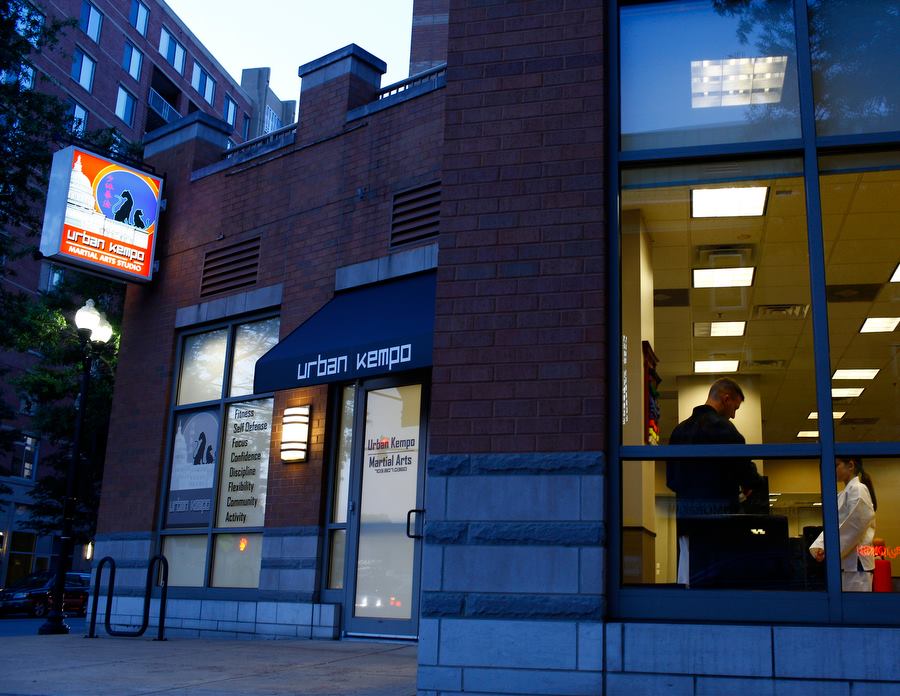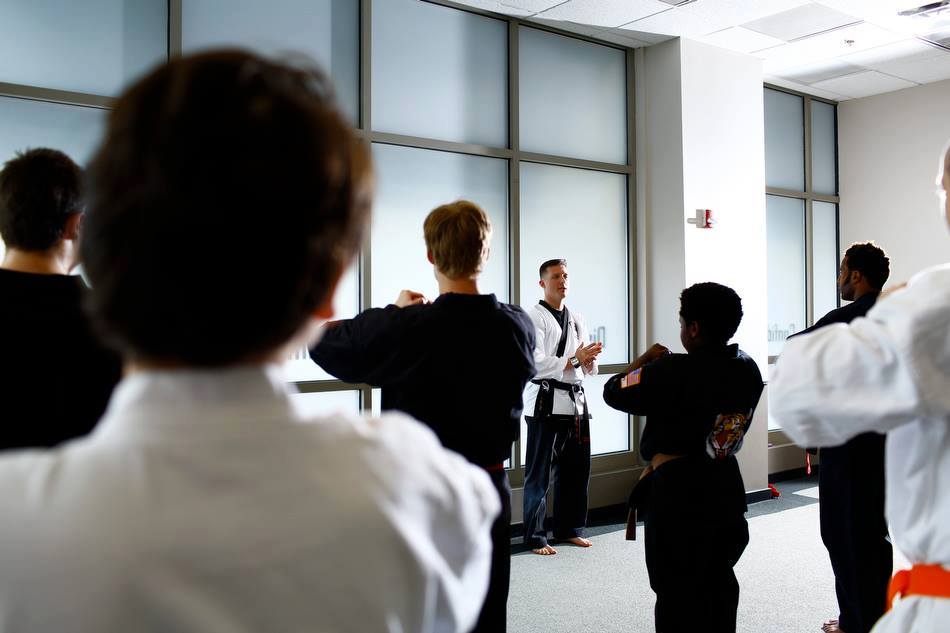


Pereira addresses “the physiology of misalignment.” As ADHD’ers, we were detrimentally placed in an environment unconducive to our abilities, which “triggers the body’s stress response, activating the sympathetic nervous system and elevating cortisol and adrenaline.” Recall from previous chapters how threatening environments trigger fight/flight and shut down responses, and how Johnathan (bipolar) and Jack (cerebral palsy) responded similarly to the dojo in ways reflecting common PTSD-oriented behaviors, given the challenges it presented them with.
For Johnathan the challenge was one of temperance, while Jack’s athleticism. For my friends and I, it was primarily one of pace and format. Falling behind early in elementary school, we intuitively sensed our disadvantage and like Johnathan and Jack, disdained being judged and pigeonholed, and worse, being treated as “less than” amongst peers whom we were emotionally and intellectually more advanced. When Pereira refers to the “stress response,” she is implying the threat responses of flight/flight, which we’ve depicted with clarity in recounting the experiences of Johnathan and Jack. All day, five days a week, year after year, this “physiology of misalignment” took a toll on us, as Pereira continues:
“Persistent misalignments result in prediction errors within our brain, demanding considerable physiological energy to resolve these discrepancies, leading to exhaustion. Thirdly, ongoing stress responses disrupt key brain regions, impairing emotional regulation and cognitive clarity, which perpetuates cycles of ineffective behavior. Finally, misalignments disturb our body’s essential homeostasis, forcing the system to repeatedly expend energy attempting to regain balance. Thus, alignment is physiologically essential, helping to reduce internal tension while boosting overall resilience and health.”
Our attempts towards comedy were an attempt at reconciling misalignment, minimizing “free energy,” and bringing balance to homeostasis. They were intuitive survival efforts.
If I don’t reverse the flow of Miss Hinkle’s class so that I can swim, so that I can become empowered, there is no Urban Kempo, Wagner College, or graduate degree. There is no book. And if there were, it would be entitled Fish out of Water instead of Petals in the Sun. You don’t learn the truth about authenticity, or about the chemicals that drive much of our behavior. My divergents never become empowered. Ihsh isn’t using his arm or hand. I knew that I had contributions to make. But I was figuratively drowning in the school system and home. 7th grade Mike was forced to drain the stale water out of the classroom, to give him and his gifted short bus friends, at least a chance. We did it as respectfully as possible. We kept smiles on people’s faces, and we stood up for nerds who got picked on. We didn’t yell or curse at the teachers. We engaged in antics reminiscent of both Johnathan and Jack, a legacy I’m writing to both clarify and reverse. Our seventh-grade best selves kept our chins up amid short-bus social pigeonholing and outright academic rejection. We maintained our self-esteem by way of our unity rooted comedy, which was perceived as rebellious, at times seeping into the picture by way of, Slim Jims…
(Continued)
These were efforts towards reducing free energy, failure, and stress through play. “One way to…reduce free energy is through play. Play goes beyond just fun and games. It offers a way to explore the world, challenge our abilities, and discover our agency.” Like I mentioned with Johnathan and Jack, “play serves a valuable purpose: resolving uncertainty about what we can and can’t control.” We were, Neuroscientifically speaking, managing our environment as best we could, as “joy can then be understood as our intrinsic signal that emerges when uncertainty is successfully minimized and predictions about the world align with sensory inputs in a meaningful and rewarding way.”
The only thing we could predict about our academic environment was our insufficiency, enabling identities of idiots and losers that conflicted with our self images. This led to incredibly high levels of unresolved stress, uncertainty…free energy. Through comedy, we gained social prestige and fulfillment. But more, we were able to fulfill the necessary human component of successfully predicting the outcomes of our behaviors, and the more preferable sensations and identities awarded by them. As the chemical orientations of our unique nervous systems rendered our misalignment as a rule, and as children endeavoring to maintain our self esteem and dignity, we didn’t have a choice.
While a classroom setting encourages a sedimentary, sustained-focus environment, ADHD tends towards “rapid adaptation rather than sustained focus. Individuals with ADHD often demonstrate a heightened responsiveness to novelty, leading to quick shifts in attention and high energy levels” presenting “challenges in traditional educational and workplace settings.” This explains why I made a home for myself in a dojo, where things are constantly on the move and chaotic, as ADHD’ers are ‘”highly adaptable in unpredictable environments.”
Remembering from Chapter 2 that in order to minimize free energy, one can either a) change themselves, or b) change their environment, one can see with clarity, that, being challenged with conditions adverse to the school setting, we were forced to engage in ways to make our environment amenable to us, “rather than being forced into conventional molds that may not serve [us].” Indeed, “the deep sense of joy and relief that comes from engaging in activities and experiences that resolve uncertainty in a manageable way,” encouraged our antics. Most importantly is that an urge or tendency towards rebellion did not.